Event Production Management
Coordinated Event Production Services
Appealing events require hundreds of decisions made at the appropriate time. Before anyone steps up onto the live stage, there are budgets, vendors, crews, equipment, speaker timelines, staging and live cues to consider. Digital Xperience Group offers corporate, association, medical, nonprofit and education event production management that is independent. As a full service event production company, we understand how every technical detail impacts your broader audience experience.
With dedicated production management, we keep your budget controlled, your schedule organized, and every room ready for show day.

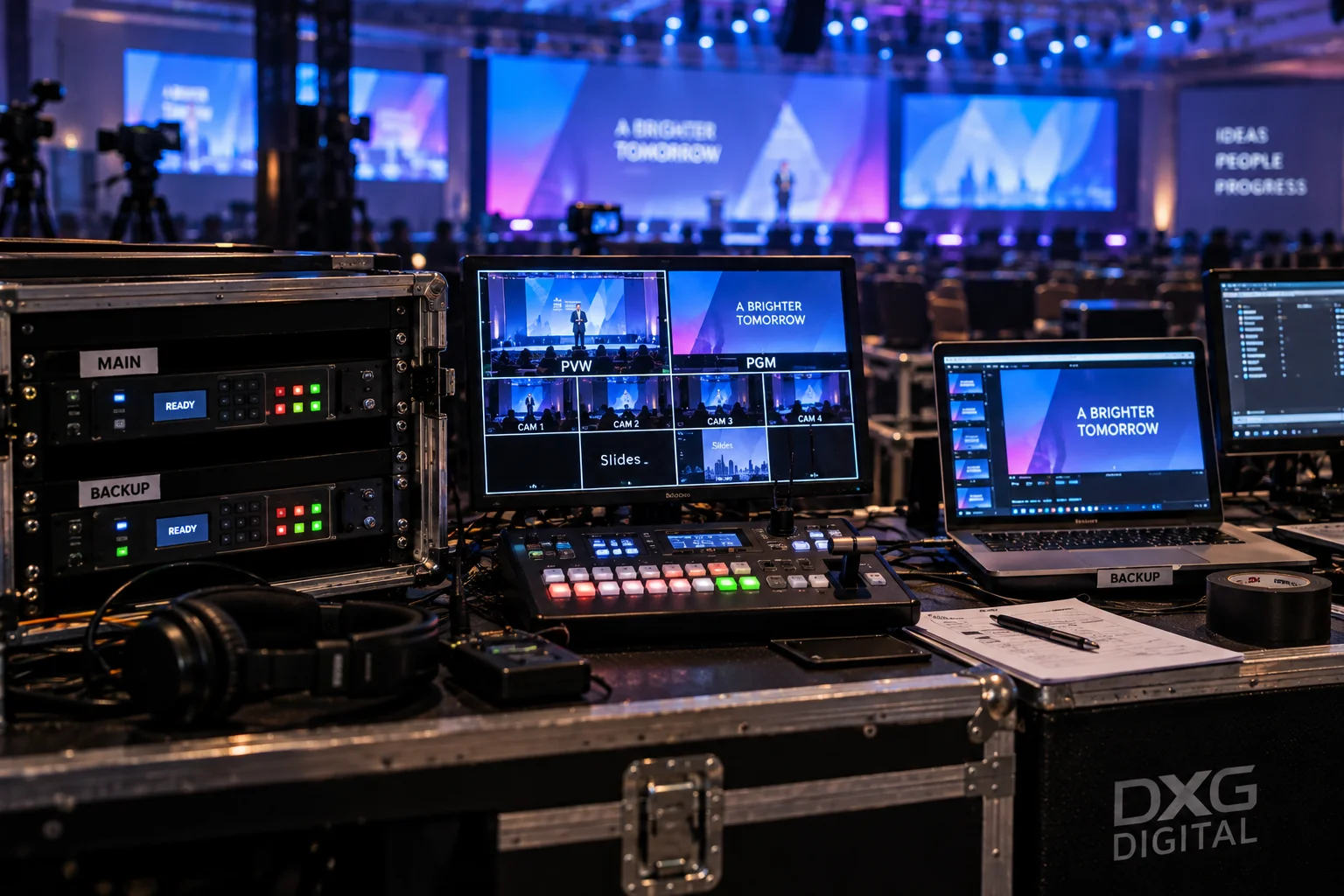
Master content &playback schedule
Plan, sync and run every screen with precision.

Programs Designed Around What You Need
DXG provides event production services customized to the specific format, audience expectations, and technical demands of your organization.
Corporate Events
Our corporate event production management covers sales kickoffs, user conferences, and executive summits. We focus on executive stage presence, strict brand standards, presentation playback, and down to the second timing.
Association Conferences
We deliver association conference production built for scale. Our team manages main stage general sessions alongside concurrent breakout rooms, committee meetings, volunteer schedules, and multi vendor timelines.
Medical Meetings
Our production workflow accounts for CME (Continuing Medical Education) compliance requirements, mandatory presenter disclosures, approved medical content formats, and precise session timings built directly into production milestones.
Fundraising Events
We produce fundraising events and live appeals where thoughtful lighting, crisp audio, smooth video transitions, and precise staging keep the evening moving and create the right setting for giving.
Education Programs
We manage commencements, academic convocations, and educational symposiums operating on fixed dates, serving large audiences across wide physical footprints.
Keep Your Dedicated Producer for In House AV
Some contracts require you to use the venue’s in house AV team for equipment and room labor. That covers the gear and crew in the room. It does not replace the planning, budgeting, show flow development, and show day leadership your event still requires.
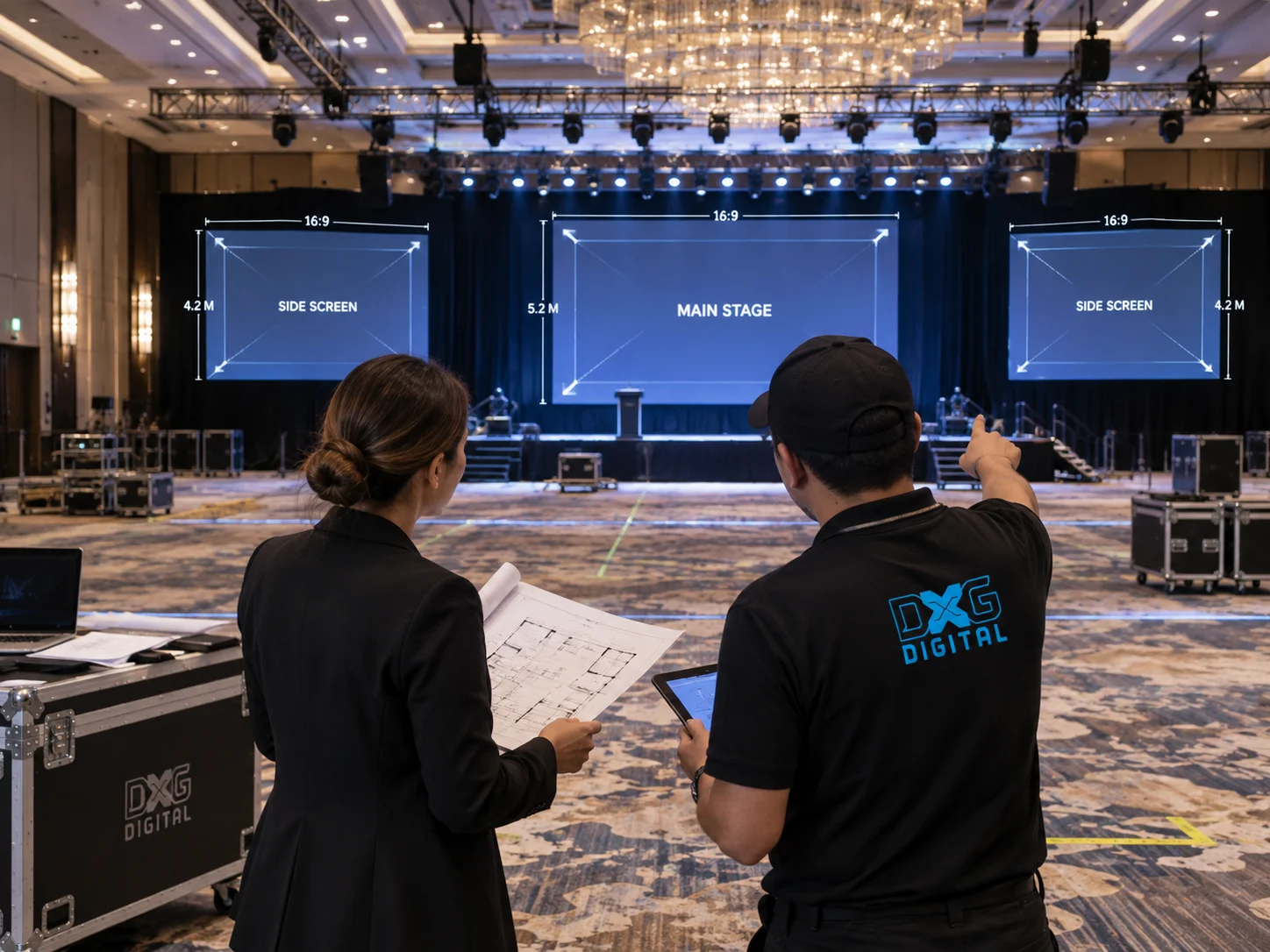
Ballroom during load-in. A meeting planner and the DXG producer stand together over a floor plan or tablet in the foreground, engaged and calm. Behind them, a venue in-house crew in their own uniforms flies a screen or sets a stage. The image should say "two teams, one plan" without anyone looking stressed. Daylight or work-light, natural color.
In house AV supplies the equipment. DXG manages the production.
We review the in-house proposal before you sign it, build the production budget and schedule around venue rules, coordinate the in-house team, your speakers, and your content, run technical rehearsals, and lead show day with a dedicated producer.
The production plan travels with you.
Budget history, room plans, run of show templates, speaker workflows, and the producer who knows your program stays with DXG. Nothing restarts from zero when the venue changes.
You work with the same producer under your choice of operational model.
You can choose full service DXG execution with our equipment, crew, and production in one team, use in house AV again with DXG managing production, or select any mix the venue and budget call for.
How We Manage Your Production
6 stages. Each one produces the exact technical information the next stage needs.
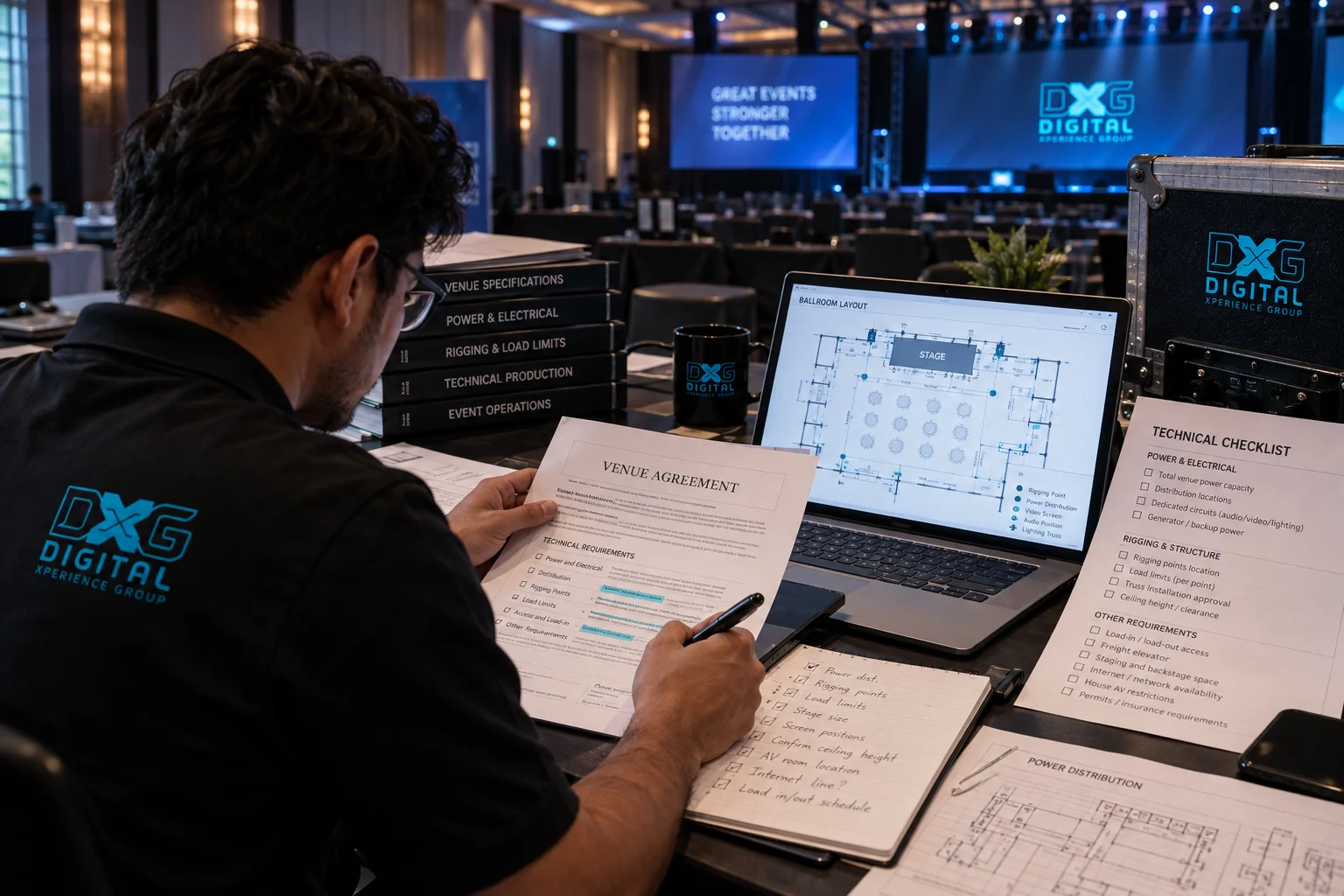
Empty ballroom, chairs stacked, the producer with a laser measure or pointing at a rigging point on the ceiling. Wide, slightly low angle, lots of ceiling.
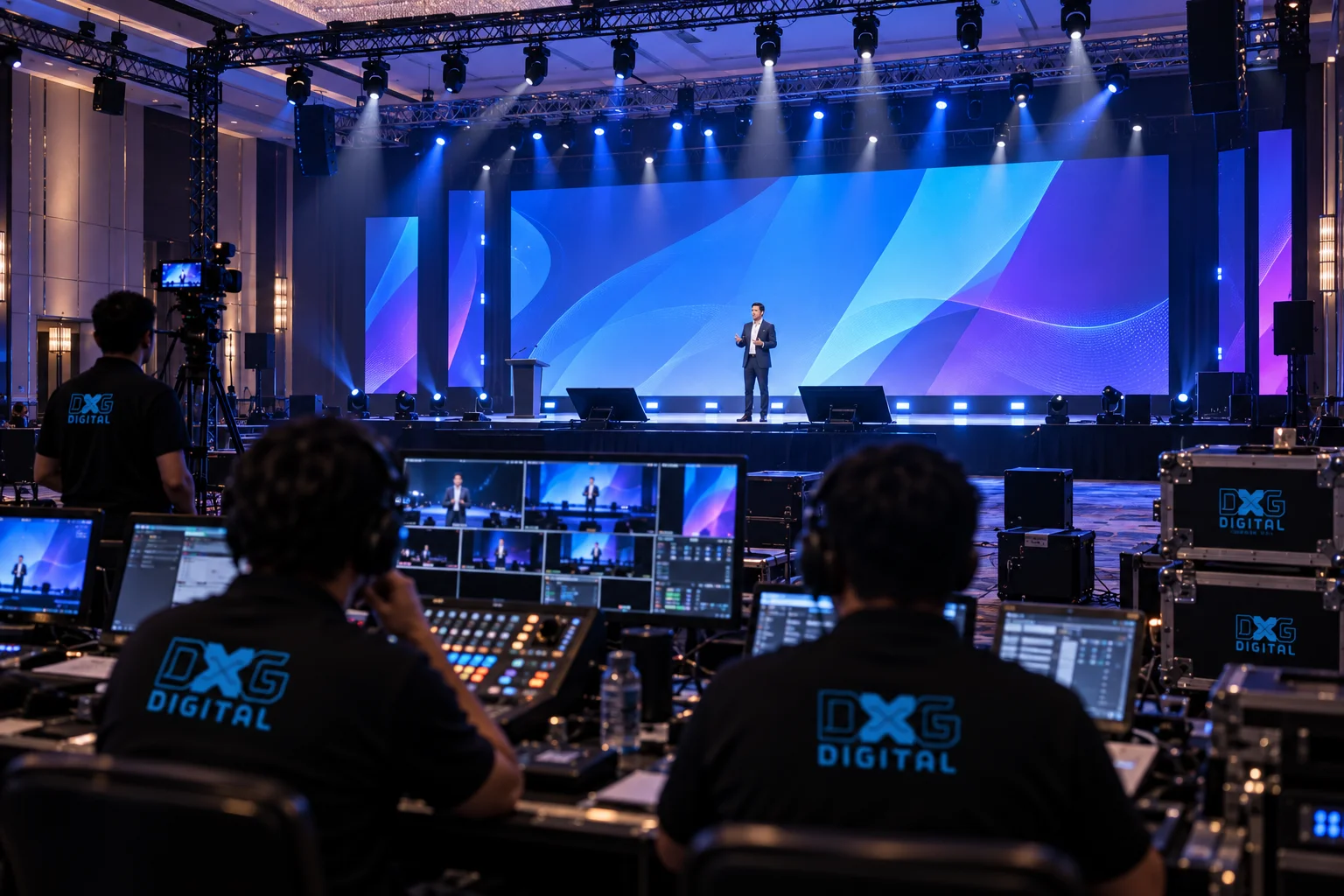
A presenter on stage under half house lights, confidence monitor visible, crew at the tech table in the foreground with the run of show open. Quiet, focused.
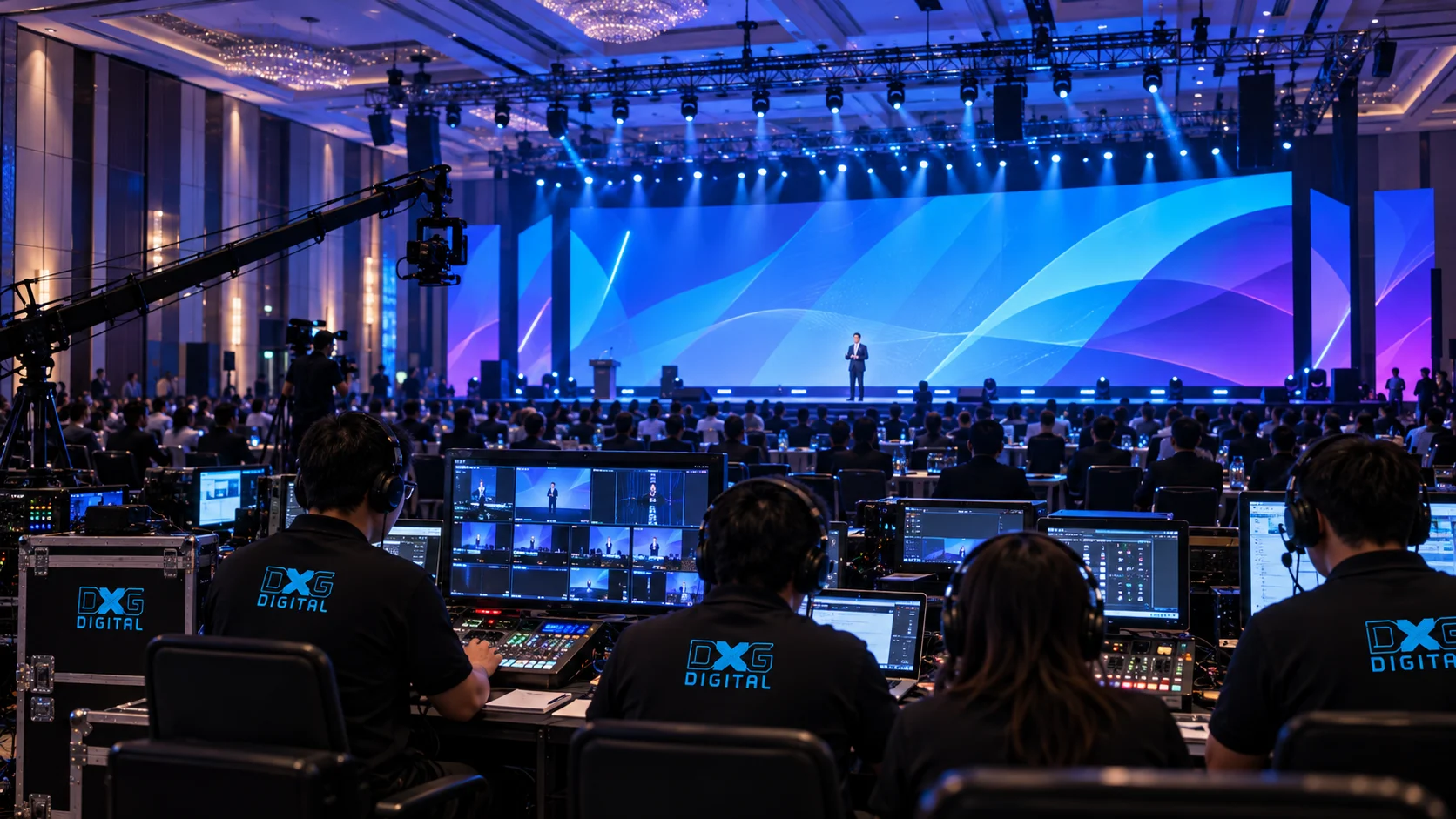
Full general session from the back of house at the moment a keynote begins: LED wall bright, audience seated, producer's silhouette at FOH in the bottom corner. High energy.
- 1
Discovery and Scoping
Format, audience, venue, budget, agenda, room count, and production goals. We establish a defined scope before equipment or vendor decisions are made.
- 2
Planning and Vendor Coordination
Working budget, technical scope, room plans, staffing, and one master production timeline that updates as the program changes.
- 3
Technical Preparation
Room specs, run of show, speaker materials, cue sheets, crew schedules, and a technical site visit to confirm venue conditions.
- 4
Rehearsal
Presentations, video, audio, lighting, stage movement, and timing tested in the real room before attendees arrive.
- 5
Show Day Execution
Our producer directs setup, checks, crew, vendors, and live show flow from the front of the house. Your planners stay with attendees and stakeholders.
- 6
Closeout and Debrief
Strike, equipment return, vendor reconciliation, documentation, and a debrief that feeds directly into your next planning cycle.
What Production Management Can Include
These are the event production services a meeting planner can engage on their own, with equipment and labor coming from in house AV, another vendor or DXG directly. Scope follows your format, venue, schedule, and room count.
Production budgeting and scope development to establish category allowances before commitments, updated as scope changes.
AV proposal and RFP (Request for Proposal) review for a line by line check of scope, pricing, crew assumptions, and overtime exposure.
Venue and in house AV coordination to fold access, power, rigging, exclusives, and labor rules into one plan.
Technical site visits to verify dimensions, rigging points, sightlines, and loading access before load in.
Production schedules to establish one timeline from advance work through strike, with call times per department.
Room by room technical planning to ensure keynote stages and breakout rooms each get the setup their purpose needs.
Vendor coordination to maintain one production contact across AV, staging, lighting, decor, and technical vendors.
Labor and crew planning to check crew calls against the real schedule and workload.
Run of show development to unify cues, playback, transitions, timing, and owners in one working document.
Speaker and content coordination to collect, test, and rehearse files with clear deadlines for presenters.
Technical rehearsals to secure a controlled window to test the live sequence in the actual room.
On site production management for producer led setup, general sessions, breakouts, and closeouts.
Get an Independent AV Proposal Review
A proposal can look complete on paper while still leaving gaps in labor, setup time, or backup coverage. Get a second opinion with no pressure and just a useful conversation about your event. An audit evaluates 5 core areas.
No pressure. No pitch deck. Just a conversation about your event.
Close, overhead: a printed AV proposal with cyan highlighter marks and margin notes, a pen, a laptop edge showing a room diagram. No faces. Tight crop, shallow depth of field. Reads as "someone who knows what to look for has already been through this."
- Scope AlignmentProposal checked against program design, room count, agenda, and technical requirements.
- Pricing ReviewQuoted costs weighed against scope, labor assumptions, and timeline.
- Labor Call ReviewCrew hours matched to the real setup, rehearsal, show, and strike schedule.
- Technical Risk ReviewSingle points of failure, missing backups, and technical dependencies flagged.
- Contract and Change Order ReviewOvertime, cancellation, substitution, and change order terms worth a second look.
Get Started with These 3 Steps
Tell Us About Your Event
Dates, venue, agenda, room count, production goals, and any AV proposals or documents already in hand.
Discovery Call
We review the event in detail and identify where production support adds the most value across budget, vendors, content, rehearsals, and show day.
Scope and Proposal
A production proposal built around your event, with services, timeline, and investment spelled out clearly.
Questions planners ask us
Build the Production Plan Before Show Day
The right production structure gives meeting planners better control over decisions, spending, and execution. Tell us about your event and start the conversation with a production team focused on the full program.
Schedule a Strategy Call
A 30 minute working session on your event. Not a sales call.
Schedule a Strategy CallBook the call with no pressure, no pitch deck, and just a conversation about your event.